
Document Type : Original Articles
Introduction
Autoimmune diseases are among the most complex diseases in terms of diagnosis and treatment. At least 4% of the global population suffers from an autoimmune disease (Miller, 2023). Autoimmune diseases result from a malfunction in the immune system, where the immune system mistakenly produces antibodies against self-proteins. Normally, the immune system has regulatory mechanisms to control autoantibodies, but these mechanisms fail in individuals with autoimmune diseases (Hasson et al., 2012). Examples of autoimmune diseases include rheumatoid arthritis (RA), Sjögren’s syndrome, celiac disease, inflammatory bowel disease, Addison’s disease, psoriasis, and systemic lupus erythematosus (SLE) (Khan & Wang, 2020). To confirm an autoimmune disease, a combination of markers, such as high-occurrence autoantibodies (e.g. anti-nuclear antibodies [ANA]), along with blood and biochemical changes, clinical symptoms, and other factors, is used (Castro & Gourley, 2010).
It is now understood that environmental factors play a more significant role than genetics in the pathophysiology of autoimmune disorders. Toxic chemicals can directly damage self-tissues, releasing autoantigens, or bind to tissue antigens, forming neo-antigens that can trigger an autoimmune response (Vojdani et al., 2022). Currently, over 100 different autoimmune diseases have been identified, resulting from gene-environment interactions that can affect both innate and adaptive immunity (Hirt & Body-Malapel, 2020). Some researchers believe that environmental factors may contribute to up to 70% of autoimmune diseases (Khan & Wang, 2020). Exposure to environmental factors can also disrupt the gut microbiome (due to hormonal stimuli, oxidative stress, or other mechanisms). The result can be inflammation, autoimmunity, and conditions such as diabetes and ulcerative colitis (Hirt & Body-Malapel, 2020).
Among environmental triggers, microplastics (MPs) have recently emerged as a concern because increasing exposure to MPs through ingestion or inhalation has been linked to oxidative stress, inflammation, and dysregulated microbiome, potentially leading to immune, inflammatory, or metabolic disorders (Lihua & Zhiyin, 2023). The impact of MPs on the immune system, inflammation, and the production of autoantibodies has gained attention in recent research. A global theory regarding the effect of MPs on lupus has been proposed, although this relationship has not yet been proven (Chen et al., 2024). The effect of MPs on RA has also been investigated (Lihua & Zhiyin, 2023).
Recent findings indicate that environmental factors exert a more significant influence than genetic predispositions in the pathophysiology of autoimmune disorders. Exposure to toxic chemicals can result in direct damage to self-tissues, leading to the release of autoantigens. Alternatively, these chemicals may interact with tissue antigens to create neoantigens, which can trigger an autoimmune response and contribute to the development of autoimmune diseases (Hasson et al., 2012).
The increasing levels of MP exposure, whether through ingestion or inhalation, are linked to adverse health effects, including oxidative stress, inflammation, and disruptions to the microbiome. These factors may contribute to the development of immune, inflammatory, or metabolic disorders (Hirt & Body-Malapel, 2020).
It is noteworthy that MPs significantly increased synovial cell pyroptosis by upregulating the expression of NLRP3, CASPASE-1, GSDMD, IL-1β, and IL-18. Mechanistic investigations further revealed that exposure to MPs activates the NF-κB and NRF2/KEAP1 signaling pathways. Collectively, our in vivo findings indicate that exposure to MPs facilitates synovial cell pyroptosis through heightened oxidative stress and NF-κB signaling, ultimately compromising the structural integrity and functionality of synovial tissue. This study offers novel insights into synovial damage linked to MP exposure (Zeng et al., 2024).
The immune system typically employs regulatory mechanisms to manage autoantibodies; however, these mechanisms are often dysfunctional in individuals with autoimmune diseases (Johns Hopkins University, 2026). Toxicological assessments of MPs have been documented in marine organisms and mammals, underscoring the urgent need for further research on the immunological impacts of MPs and their detrimental effects on the human immune system. MPs have the potential to be internalized by cells, leading to disruptions in intracellular signaling pathways, which can alter immune homeostasis and ultimately result in tissue and organ damage. The generation of reactive oxygen species (ROS) represents a toxicological mechanism that may arise following exposure to MPs, potentially leading to the release of damage-associated molecular patterns (DAMPs) and affecting processes related to Toll-like receptor (TLR) disruption, cytokine production, and inflammation (Yang et al., 2022).
Exposure to MPs has been shown to induce lupus-like symptoms in C57BL/6 mice and to exacerbate lupus symptoms in MRL/lpr mice. This effect is characterized by an abnormal increase in spleen DN T cells, plasma cells, serum anti-dsDNA, antinuclear antibodies (ANA), interleukin-6 (IL-6), and tumor necrosis factor-alpha (TNF-α), alongside a decrease in the CD4+/CD8+ cell ratio in the spleen and deterioration of renal pathology (Chen et al., 2024).
Materials and Methods
Animals and experimental design
Twenty-four male NMRI mice (25-35 g) aged 16 weeks were obtained from the animal breeding center of the Faculty of Veterinary Medicine, University of Tehran. The mice were housed under standard conditions (12-hour light/dark cycle, 25±2 °C, 50±10% humidity) with free access to water and standard mouse pellets. All procedures were approved by the Ethics Committee of the Faculty of Veterinary Medicine, University of Tehran.
After a two-week acclimatization period, the mice were randomly divided into four groups and received polystyrene MPs (Sigma-Aldrich, 78452-10ML-F) with a diameter of 2 micrometers via gavage for 40 and 60 consecutive days. The MPs were dispersed in deionized water and sonicated for 20 minutes to ensure complete suspension before administration.
Control group (40 days): Received 0.1 mL of physiological saline (0.9% NaCl) via gavage daily for 40 days.
Experimental group (40 days): Received 0.1 mL of polystyrene MPs (1 mg/kg) via gavage daily for 40 days.
Control group (60 days): Received 0.1 mL of physiological saline (0.9% NaCl) via gavage daily for 60 days.
Experimental group (60 days): Received 0.1 mL of polystyrene MPs (1 mg/kg) via gavage daily for 60 days.
Sample collection
Blood samples were collected via cardiac puncture one day after the 40- and 60-day treatment periods.
Laboratory tests
Hematological tests: CBC was performed using a Nihon Kohden cell counter to measure WBC, RBC, platelet count, hematocrit, hemoglobin, mean cell volume (MCV), and mean cell hemoglobin (MCH). Blood smears were prepared for morphological examination of red blood cells and differential white blood cell counts.
Biochemical tests: Serum samples were analyzed for aspartate transaminase (AST), alanine transaminase (ALT), blood urea nitrogen (BUN), creatinine, and uric acid using a Mindray BS-480 auto-analyzer.
Immunological tests: Indirect immunofluorescence was used to detect autoantibodies using 4T1 mouse breast cancer cells as the substrate.
The indirect immunofluorescence assay employs a cell line that is affixed to a specialized slide designed for this purpose, characterized by a black surface with small apertures. In human applications, the cell line predominantly utilized is Hep2 cells, which are derived from laryngeal carcinoma. These cells possess both intracellular and surface antigens that facilitate the detection of autoantibodies present in serum samples. Upon the introduction of serum to the fixed cells on the slide, any existing autoantibodies will interact with the cellular antigens, resulting in their binding. Subsequently, a conjugated polyclonal antibody, labeled with fluorescent markers and specific to autoantibodies, is added to this complex, allowing it to bind to the autoantibodies. For the experiments conducted, serum samples from laboratory mice were utilized, necessitating the use of a murine cell line for the indirect immunofluorescence assay aimed at identifying autoantibodies. The mouse breast cancer cell line (4T1) was procured from the central laboratory of the Faculty of Veterinary Medicine. The emitted fluorescent light from the cells was then observed using a fluorescence microscope (Dellavance & Andrade, 2019).
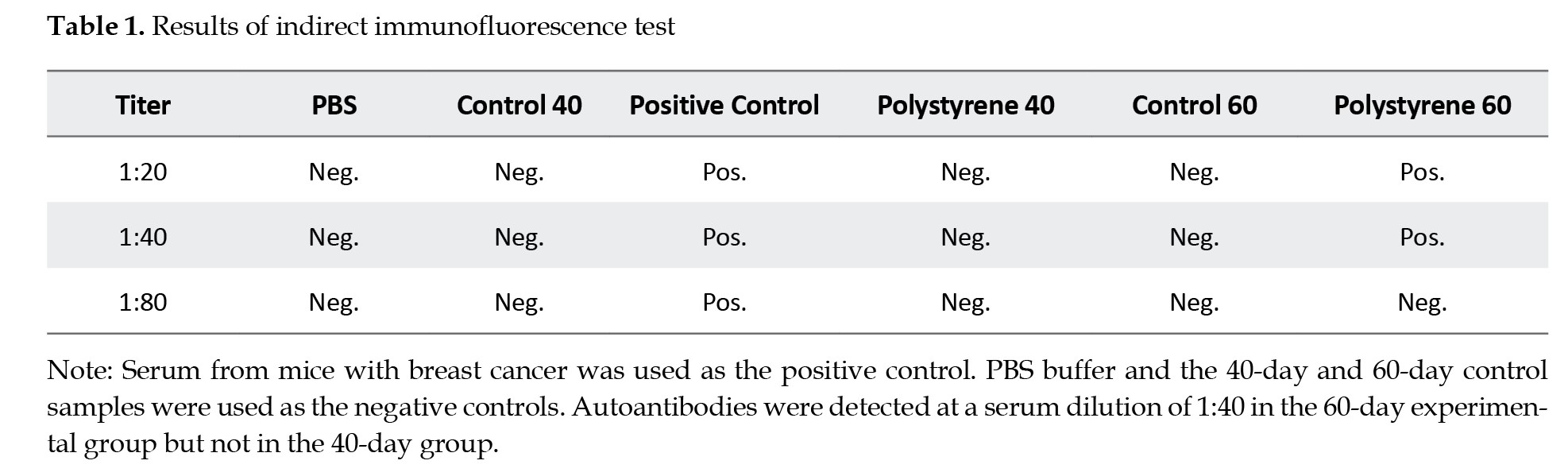
By using a polyclonal antibody against autoantibodies, both nuclear and cytoplasmic targets were addressed. Methanol and acetone were used for fixation/permeabilization of 4T1 cells. Serum from mice with breast cancer was used as a positive control. PBS buffer and the 40-day and 60-day control samples were used as negative controls.
Results
Hematological findings
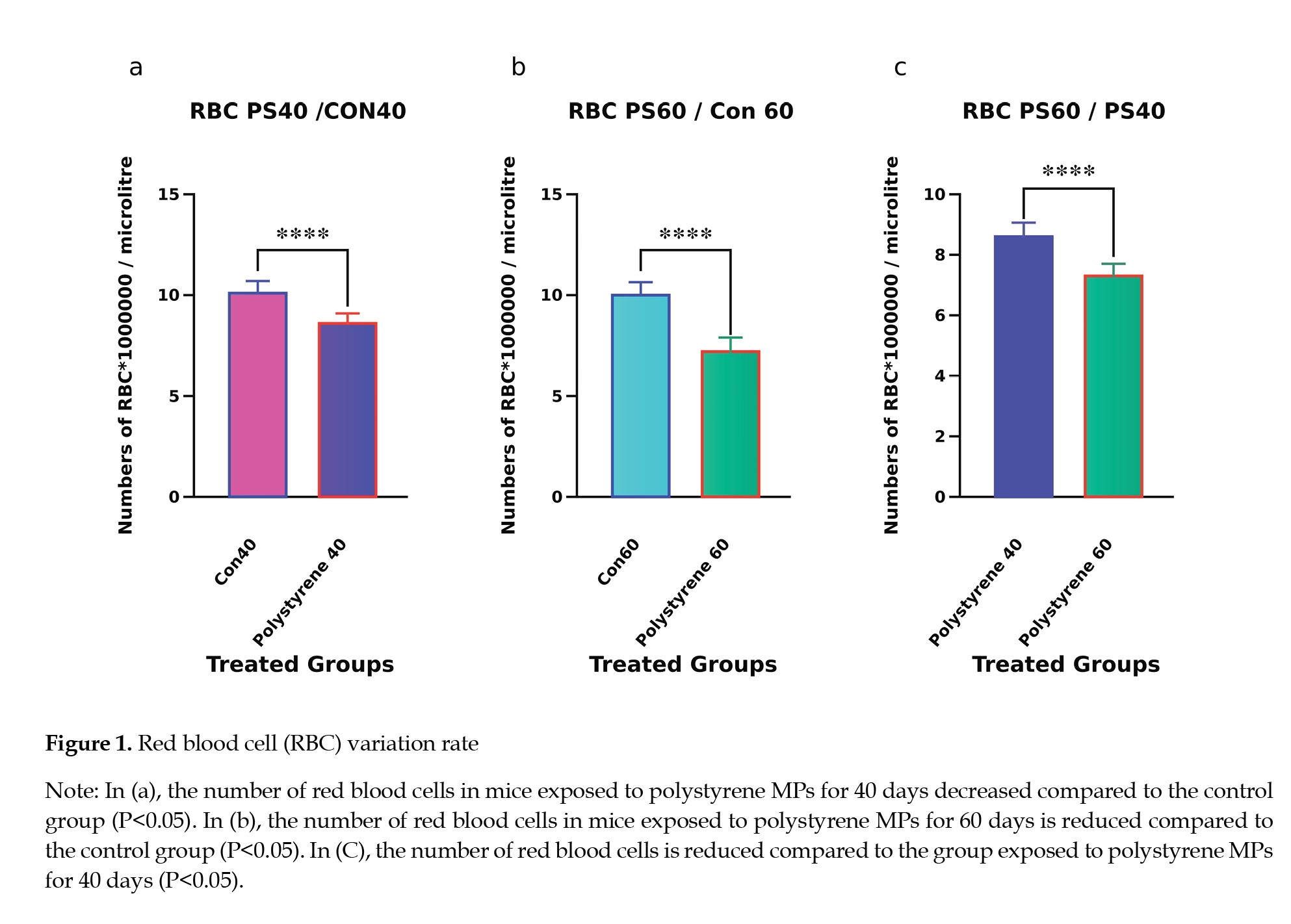
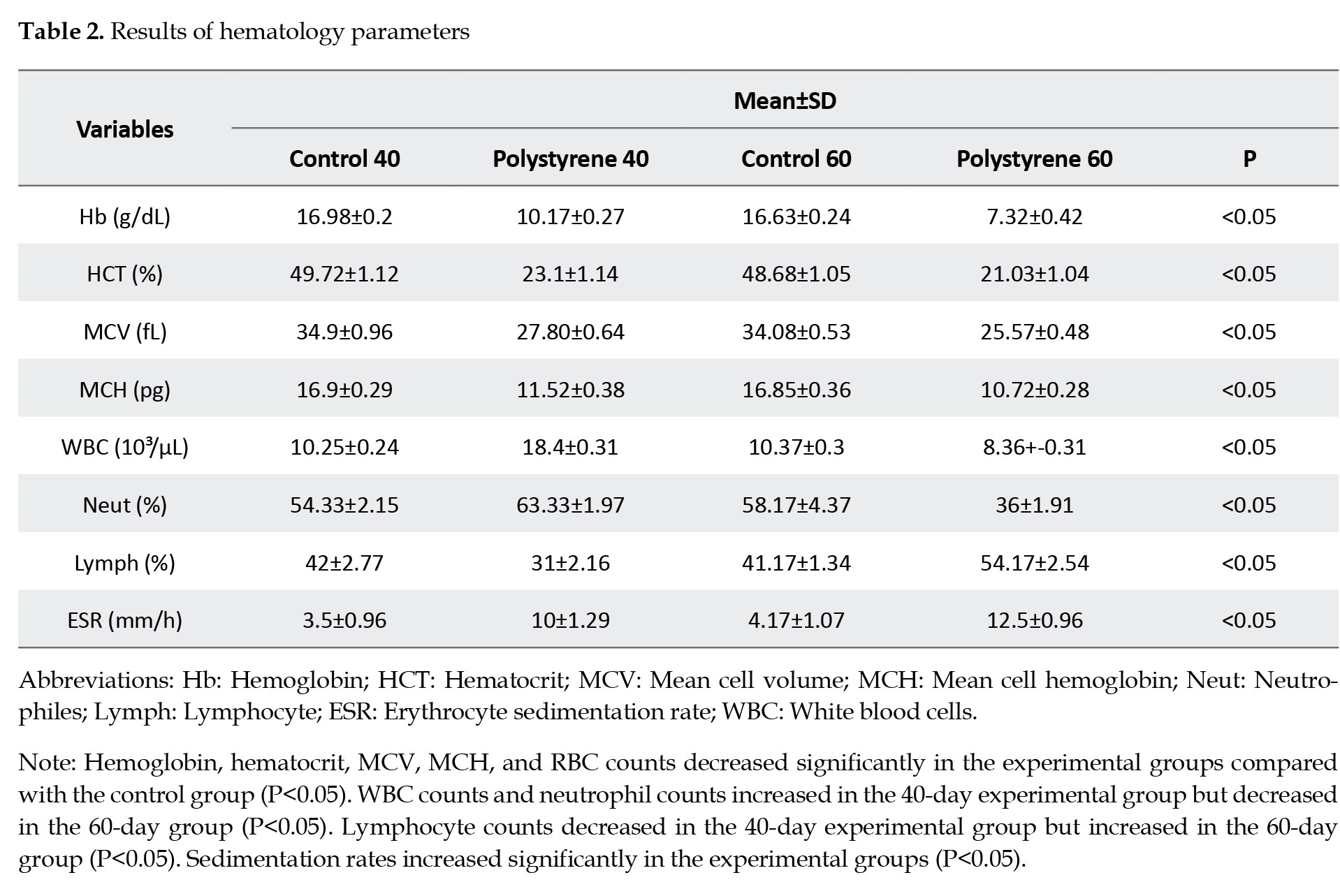
Hemoglobin, hematocrit, MCV, MCH, and RBC counts decreased significantly in the experimental groups compared to the control group (P<0.05) (Figure 1 and Table 2).
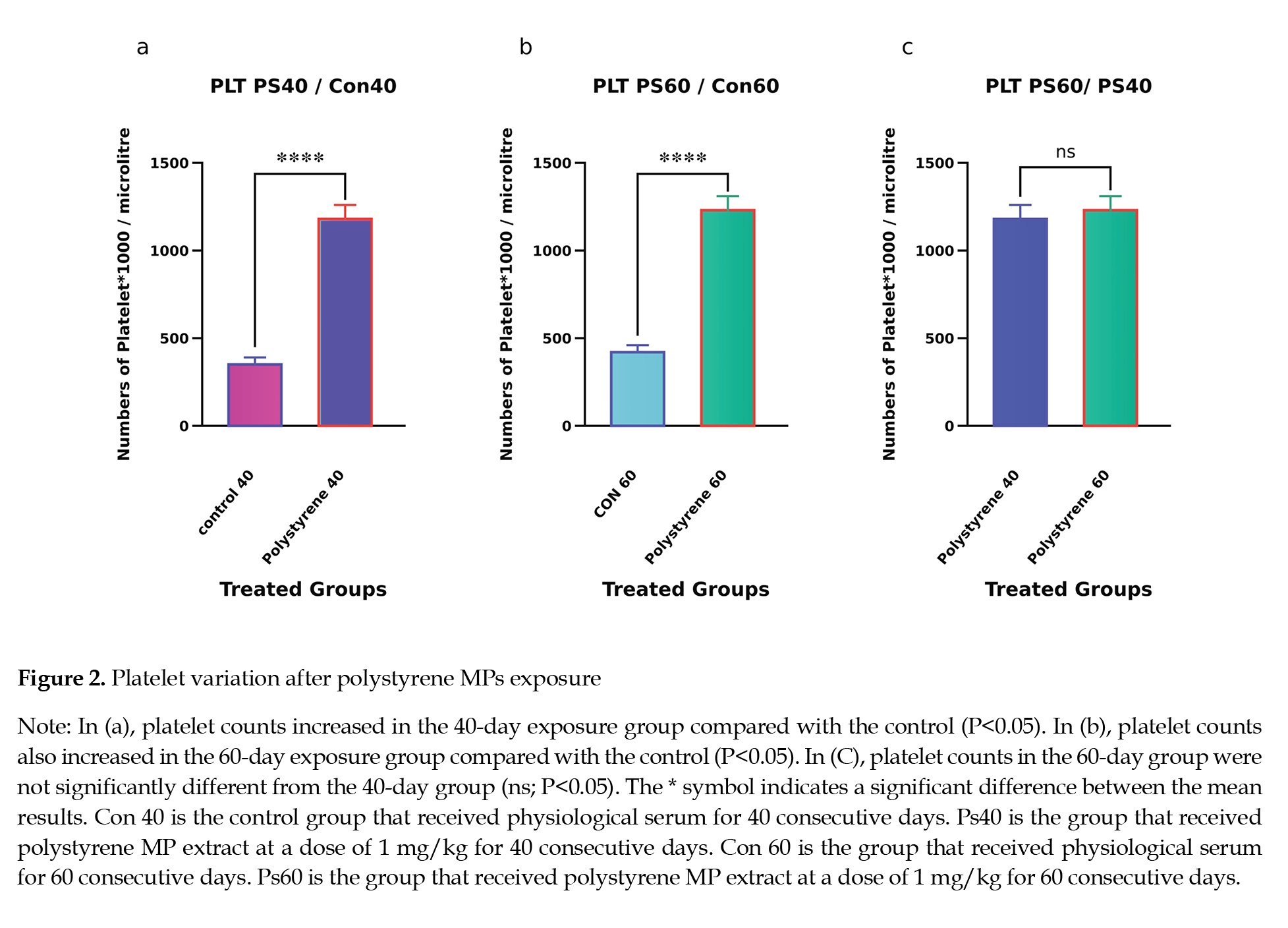
Platelet counts increased significantly in both the 40- and 60-day experimental groups (P<0.05) (Figure 2).
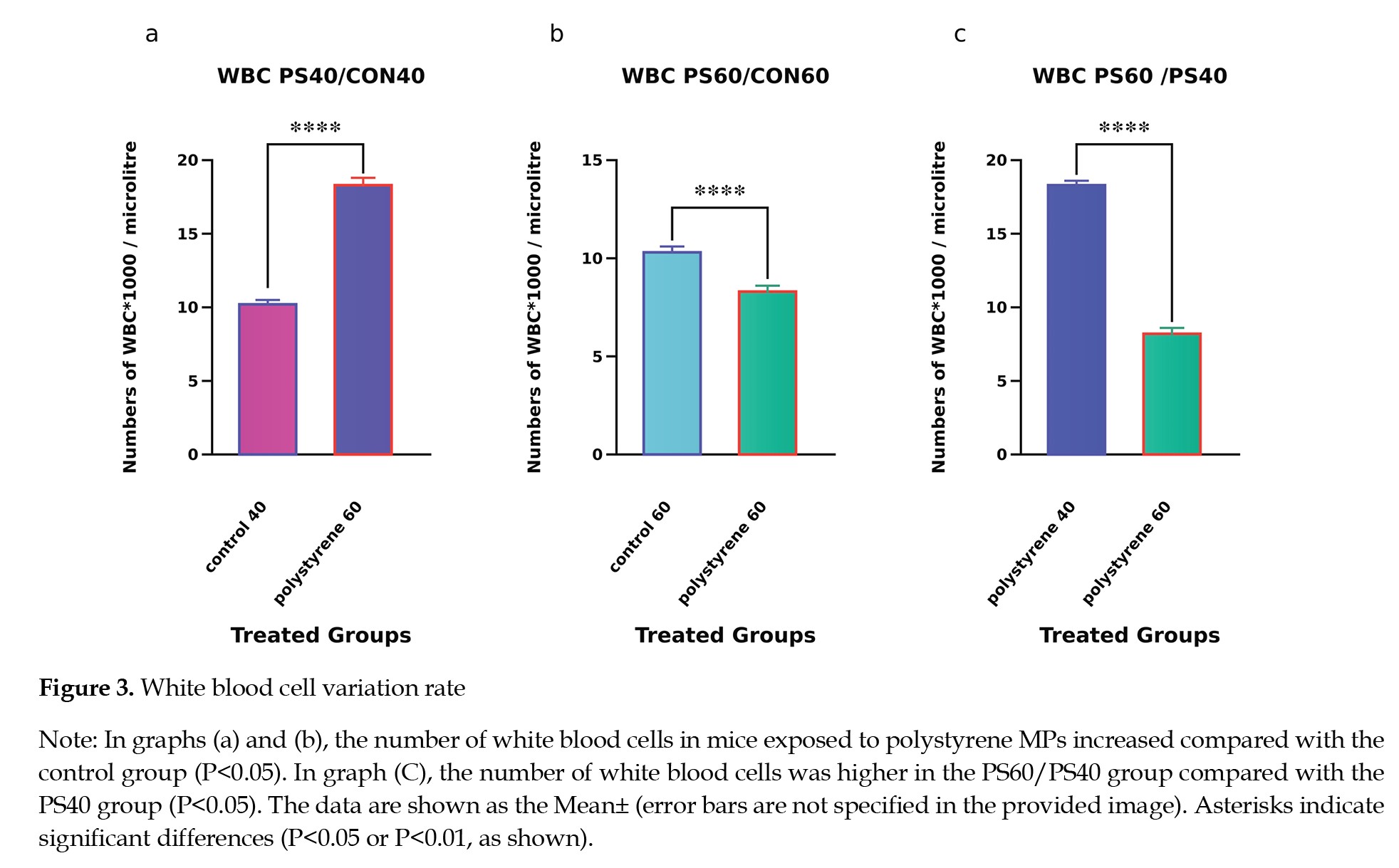
WBC and neutrophil counts increased in the 40-day experimental group but decreased in the 60-day group (P<0.05) (Figure 3 and Table 2).
Lymphocyte counts decreased in the 40-day experimental group but increased in the 60-day group (P<0.05) (Table 2). Sedimentation rates increased significantly in the experimental groups (P<0.05) (Table 2). Statistical calculations were performed using the unpaired t-test. The distribution of the results was normal. The difference in mean results with a P<0.05 at a 95% confidence level was considered significant. Graphs were drawn with GraphPad Prism software. Notably, results were distributed normally.
Biochemical findings
No significant differences were observed in AST, ALT, BUN, creatinine, or uric acid levels between the control and experimental groups (P<0.05) (data not shown). Statistical calculations were performed using the unpaired t-test. The difference in mean results with a P<0.05 at a 95% confidence level was considered significant.
Immunological findings
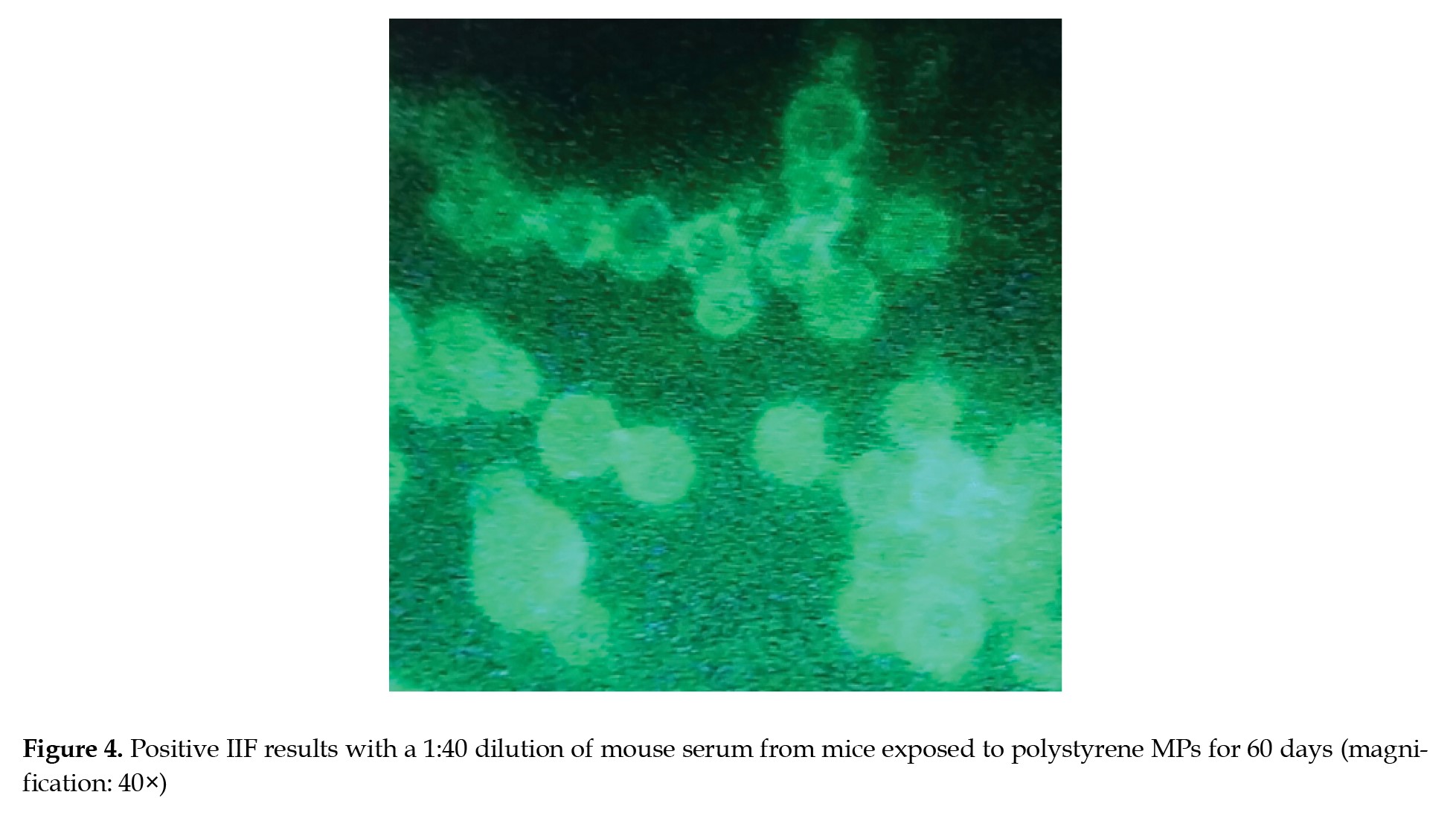
As shown in Table 1 and Figure 4, autoantibodies were detected at a serum dilution of 1:40 in the 60-day experimental group but not in the 40-day group.
Discussion
Lifelong exposure to toxic substances can lead to autoimmune diseases. Chemicals or their metabolites can directly damage self-tissues, releasing autoantigens, or bind to tissue antigens, forming neo-antigens that can trigger an autoimmune response (Vojdani et al., 2022). The diagnosis of autoimmune diseases relies on a combination of clinical symptoms, inflammatory markers, complete blood count, metabolic panels, and autoantibodies (Castro & Gourley, 2010). Common hematological findings include normochromic normocytic anemia, leukopenia, and thrombocytopenia, which are often seen in SLE (Tsouris et al., 2020). Abnormal liver function tests are common in patients with multiple sclerosis (MS) and may indicate concurrent autoimmune liver diseases, such as autoimmune hepatitis (AIH) (Tasneem & Luck, 2020).
Elevated muscle enzymes, such as creatine kinase, ALT, and AST, are observed in inflammatory myopathies (Castro & Gourley, 2010). The neutrophil-to-lymphocyte ratio (NLR) and platelet-to-lymphocyte ratio (PLR) are elevated in various inflammatory conditions, including RA (Fu et al., 2015).
Elevated BUN is associated with azotemia or hyperazotemia, often seen in chronic kidney disease (Golpasandhagh et al., 2021). Renal involvement affects 0.3-27% of patients with Sjögren’s syndrome, with tubulointerstitial nephritis being the most common form (Pasoto et al., 2019). Elevated erythrocyte sedimentation rate (ESR) is a nonspecific marker of inflammation and is often used to monitor disease activity and treatment response in conditions, such as RA (Castro & Gourley, 2010).
The use of plastics has increased significantly in recent decades. MPs, defined as plastic particles less than 5 mm in diameter, are ingested, inhaled, or absorbed through the skin (Toussaint et al., 2019). MPs can be absorbed by cells, disrupt intracellular signaling pathways, alter immune homeostasis, and ultimately cause tissue and organ damage (Yang et al., 2022).
The production of ROS is a key mechanism of MP toxicity, leading to the release of DAMPs and activation of inflammatory pathways (Yang et al., 2022). MPs have been shown to exacerbate RA, a common autoimmune disease (Lihua & Zhiyin, 2023).
Exposure to MPs can induce lupus-like symptoms in C57BL/6 mice and exacerbate lupus symptoms in MRL/lpr mice, including increased autoantibodies and pro-inflammatory cytokines (Chen et al., 2024). Renal failure is a common complication, and proteomic analysis has revealed potential mechanisms of MP-induced lupus-like nephritis in mice (Chen et al., 2024). Elevated serum uric acid levels are associated with renal damage in patients with SLE (Elera-Fitzcarrald et al., 2020).
Characteristic findings may include normochromic and normocytic anemia, indicating chronicity or severity of the disease. Common hematologic parameters also include increased or decreased platelet count and/or white blood cell count. Leukopenia and thrombocytopenia are common in patients with SLE (Castro & Gourley, 2010).
NLR and PLR are increased in various inflammatory diseases. They are elevated in patients with RA and can be used as potential indicators in estimating RA activity (Fu et al., 2015).
Toxicological studies have shown that a dose of 0.5 mg of 5 μm polystyrene MP particles (PS-MP) causes a decrease in WBC count and an increase in platelet count. Exposure to PS-MP can cause some degree of hematotoxicity. It also affects gene expression and disrupts related molecular and biological pathways in mouse bone marrow cells. PS-MP causes a significant reduction in WBC counts and inhibits the colony-forming ability of BM cells in mice (Sun et al., 2021).
The C57BL/6 murine model was concentration-dependently exposed to MPs (6, 60, and 600 μg/day) for 15 days, followed by 15 days of recovery. The results demonstrated that exposure to 600 μg/day of MPs considerably affected RBCs’ typical structure, resulting in numerous aberrant shapes. In addition, concentration-dependent reductions in hematological markers were observed (Abdel-Zaher et al., 2023)
This study aimed to investigate the effects of polystyrene MPs on the induction of autoimmune diseases in laboratory mice. Changes in immunological, biochemical, and hematological parameters were examined. Animals developed microcytic hypochromic anemia after 40 and 60 days of exposure to polystyrene MPs, along with increased white blood cell counts, increased platelet counts, elevated sedimentation rates, and increased neutrophils with decreased lymphocytes. These changes suggest the presence of inflammation. After 60 days of exposure, the anemia worsened; the WBC count decreased (leukopenia), the lymphocyte count increased, the neutrophil count decreased, and the platelet count remained elevated. Autoantibodies were not detected in the 40-day group but were found at a titer of 1:40 in the 60-day group. No significant changes were observed in biochemical parameters, such as uric acid, AST, ALT, BUN, or creatinine.
However, confirming the induction of autoimmune diseases by polystyrene MPs requires further extensive experimental studies and clinical trials. Future research should consider longer exposure periods and higher doses to increase the likelihood of autoantibody production. Such studies could provide clearer insights into the effects of polystyrene on the immune system, cellular damage, autoantibody production, and the development of autoimmune diseases.
Conclusion
This study highlights the potential of polystyrene MPs to disrupt immune homeostasis and induce autoimmune-like responses in mice. The findings underscore the need for stricter regulations on plastic pollution and further research into the immunotoxin effects of MPs in both veterinary and human medicine.
Changes in hematological parameters, as well as increased sedimentation in mice and positive autoantibody titers in mice exposed to MPs for 60 days, could be the result of inflammation or the development of an autoimmune-like disease. Our observations in this study showed that in mice exposed to polystyrene MPs for 40 days, no autoantibodies were found by indirect immunofluorescence. In mice exposed to polystyrene MPs for 60 days, we were able to observe autoantibodies at a 1:40 dilution of mouse serum. Given the positive autoantibody titer in mice exposed for 60 days, there is a possibility of developing an autoimmune disease, although this issue requires further research.
For future research, if the duration of exposure is increased and exposure is at a higher dose, the likelihood of producing autoantibodies with higher titers will be higher. For future research, measurement of specific inflammatory parameters and specific autoantibodies, as well as pathological examination of spleen tissue and examination of the CD4/CD8 lymphocyte ratio are suggested.
Ethical Considerations
Compliance with ethical guidelines
This study was approved by the Research Ethics Committee of the Faculty of Veterinary Medicine, University of Tehran, Tehran, Iran (Code: IR.UT.VETMED.REC.1403.032).
Funding
This research did not receive any grant from funding agencies in the public, commercial, or non-profit sectors.
Authors' contributions
All authors contributed equally to the conception and design of the study, data collection and analysis, interception of the results and drafting of the manuscript. Each author approved the final version of the manuscript for submission.
Conflict of interest
The authors declared no conflict of interest.
References
Abdel-Zaher, S., Mohamed, M. S., & Sayed, A. E. H. (2023). Hemotoxic effects of polyethylene microplastics on mice. Frontiers in Physiology, 14, 1072797. [DOI:10.3389/fphys.2023.1072797] [PMID]
Castro, C., & Gourley, M. (2010). Diagnostic testing and interpretation of tests for autoimmunity. The Journal of Allergy and Clinical Immunology, 125(2 Suppl 2), S238–S247. [DOI:10.1016/j.jaci.2009.09.041] [PMID]
Chen, H., Wan, L., Qiu, Y., Qiu, F., Wen, C., & Mao, Y., et al. (2024). Microplastics exposure induced and exacerbated the development of systemic lupus erythematosus in mice. The Science of the Total Environment, 909, 168586. [DOI:10.1016/j.scitotenv.2023.168586] [PMID]
Dellavance, A., & Andrade, L. E. C. (2019). Detection of autoantibodies by indirect immunofluorescence cytochemistry on HEp-2 cells. Methods in Molecular Biology (Clifton, N.J.), 1901, 19–46. [DOI:10.1007/978-1-4939-8949-2_3] [PMID]
Elera-Fitzcarrald, C., Reátegui-Sokolova, C., Gamboa-Cardenas, R. V., Medina, M., Zevallos, F., & Pimentel-Quiroz, V. R., et al. (2020). Serum uric acid is associated with damage in patients with systemic lupus erythematosus. Lupus Science & Medicine, 7(1), e000366. [DOI:10.1136/lupus-2019-000366] [PMID]
Fu, H., Qin, B., Hu, Z., Ma, N., Yang, M., & Wei, T., et al. (2015). Neutrophil- and platelet-to-lymphocyte ratios are correlated with disease activity in rheumatoid arthritis. Clinical Laboratory, 61(3-4), 269-273. [Link]
GolPasand Hagh, L., Ariankia, A., & Shahbazian, H. (2021). [Evaluation of Periodontal Status in Patients with Chronic Renal Disease (Persian)]. Jundishapur Scientific Medical Journal, 20(5), 498-505. [DOI:10.32598/JSMJ.20.5.2679]
Hasson, S. S., Al-Balushi, M. S., & Al-Jabri, A. A. (2012). The role of the autoimmunity laboratory in autoimmune diseases. Asian Pacific Journal of Tropical Disease, 2(2), 159-162. [DOI:10.1016/S2222-1808(12)60036-X]
Hirt, N., & Body-Malapel, M. (2020). Immunotoxicity and intestinal effects of nano-and microplastics: A review of the literature. Particle and Fibre Toxicology, 17(1), 57. [DOI:10.1186/s12989-020-00387-7] [PMID]
Johns Hopkins University, Department of Pathology. (2026). Definition of autoimmunity and autoimmune disease. Baltimore: Johns Hopkins University. [Link]
Khan, M. F., & Wang, H. (2020). Environmental exposures and autoimmune diseases: Contribution of gut microbiome. Frontiers in Immunology, 10, 3094. [DOI:10.3389/fimmu.2019.03094] [PMID]
Lihua, C., & Zhiyin, T. (2023). Microplastics aggravates rheumatoid arthritis by affecting the proliferation/migration/inflammation of fibroblast-like synovial cells by regulating mitochondrial homeostasis. International Immunopharmacology, 120, 110268. [DOI:10.1016/j.intimp.2023.110268] [PMID]
Miller, F. W. (2023). The increasing prevalence of autoimmunity and autoimmune diseases: An urgent call to action for improved understanding, diagnosis, treatment, and prevention. Current Opinion in Immunology, 80, 102266. [DOI:10.1016/j.coi.2022.102266] [PMID]
Pasoto, S. G., Adriano de Oliveira Martins, V., & Bonfa, E. (2019). Sjögren’s syndrome and systemic lupus erythematosus: Links and risks. Open Access Rheumatology: Research and Reviews, 11, 33-45. [DOI:10.2147/OARRR.S167783] [PMID]
Sun, R., Xu, K., Yu, L., Pu, Y., Xiong, F., & He, Y., et al. (2021). Preliminary study on impacts of polystyrene microplastics on the hematological system and gene expression in bone marrow cells of mice. Ecotoxicology and Environmental Safety, 218, 112296 [DOI:10.1016/j.ecoenv.2021.112296] [PMID]
Tasneem, A. A., & Luck, N. H. (2020). Autoimmune hepatitis: Clinical characteristics and predictors of biochemical response to treatment. Journal of Translational Internal Medicine, 8(2), 106-111. [DOI:10.2478/jtim-2020-0016] [PMID]
Toussaint, B., Raffael, B., Angers-Loustau, A., Gilliland, D., Kestens, V., & Petrillo, M., et al. (2019). Review of micro- and nanoplastic contamination in the food chain. Food Additives & Contaminants. Part A, Chemistry, Analysis, Control, Exposure & Risk Assessment, 36(5), 639–673. [DOI:10.1080/19440049.2019.1583381] [PMID]
Tsouris, Z., Liaskos, C., Dardiotis, E., Scheper, T., Tsimourtou, V., & Meyer, W., et al. (2020). A comprehensive analysis of antigen-specific autoimmune liver disease related autoantibodies in patients with multiple sclerosis. Auto- Immunity Highlights, 11(1), 7. [DOI:10.1186/s13317-020-00130-4] [PMID]
Vojdani, A., Vojdani, E., Rosenberg, A. Z., & Shoenfeld, Y. (2022). The role of exposomes in the pathophysiology of autoimmune diseases II: Pathogens. Pathophysiology, 29(2), 243-280. [DOI:10.3390/pathophysiology29020020] [PMID]
Yang, W., Jannatun, N., Zeng, Y., Liu, T., Zhang, G., & Chen, C., et al. (2022). Impacts of microplastics on immunity. Frontiers in Toxicology, 4, 956885. [DOI:10.3389/ftox.2022.956885] [PMID]
Zeng, W., He, S., Zhao, Y., Jiang, M., Wang, W., & Yang, L., et al. (2024). Microplastics exposure aggravates synovitis and pyroptosis in SLE by activating NF-κB and NRF2/KEAP1 signaling. Toxics, 12(12), 840. [DOI:10.3390/toxics12120840] [PMID]
