
Document Type : Original Articles
Introduction
Rabies has long been acknowledged as a lethal disease due to its nearly universal fatality once clinical symptoms manifest (Swinkels et al., 2025). Aristotle first documented the illness in the fourth century BC, with the Roman physician Celsus subsequently noting its effects on humans in the first century AD, underscoring the longstanding awareness and apprehension associated with rabies (Dalfardi et al., 2014). Following an incubation period that can extend from a few days to several years, rabies generally initiates with nonspecific febrile symptoms and local pain at the site of the bite. This condition often progresses within two weeks to either encephalitic or paralytic forms, ultimately leading to coma and death within two to three days (Priya et al., 2021). The rabies virus (RABV) and related viruses belong to the Rhabdoviridae family and are recognized as zoonotic, neurotropic agents (Zhu & Guo, 2016). These viruses can infect a diverse array of mammals, including dogs, cats, bats, and livestock. Transmission predominantly occurs through the saliva of infected animals, primarily via bites, which account for 99% of cases globally (Finnegan et al., 2002).
Worldwide, rabies remains a neglected zoonosis, responsible for significant mortality, particularly among underserved populations, despite being entirely preventable through vaccination for both humans and animals. In India, rabies presents a significant public health challenge, with reported cases across the country, except in the water-locked islands of Lakshadweep, Andaman, and Nicobar. Dogs account for 95% of human rabies cases, followed by cats (2%) and other animals (1%) (Radhakrishnan et al., 2020; Dewan et al., 2024). Rural regions, which house approximately 68.8% of India’s population, are disproportionately affected due to limited awareness, inadequate access to post-exposure prophylaxis (PEP), and the underutilization of rabies prevention facilities. Myths and misconceptions, such as the application of red chillies, oils, or herbs, further impede effective management (Ling et al., 2023). Considering these gaps in community knowledge, attitudes, and practices (KAP) regarding rabies, this study seeks to evaluate the KAP among residents of Tamil Nadu to inform targeted interventions aimed at enhancing rabies prevention and control measures.
Materials and Methods
Study design and population
This cross-sectional study was conducted among residents of Chennai City, Tamil Nadu, India. The research was organized under the auspices of the Department of Allied Health Science at a tertiary care teaching hospital affiliated with a university in South India. Although the initiative was institution-based, data collection was conducted through house-to-house visits within the hospital’s designated community catchment areas to evaluate public KAP regarding rabies prevention. The study population included individuals aged 15 to 80 years residing in Chennai City, Tamil Nadu, South India. Individuals diagnosed with mental health conditions, as well as those unwilling to provide written consent, were excluded from participation. Data collection occurred over one year, from January 2024 to December 2024, utilizing both house-to-house interviews and self-administered questionnaires.
Sample size
The sample size was determined using the Equation 1 (Lwanga & Lemeshow, 1991):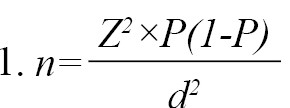
Where, n represents the sample size, the Z value is 1.96 for a 95% confidence level, and P refers to the expected prevalence rate of 76% for awareness of rabies among individuals aged 20 and above in the urban field area of Anakaputtur (Sivagurunathan et al., 2021). The estimated sample size was calculated to be 280 using the formula provided, applying a precision of 5%. To enhance the coverage of the study population, the sample size was subsequently increased by 3.4 times, resulting in an estimated total of 973 subjects for inclusion in the study.
Instrumentation:
The present study utilized a survey questionnaire derived from scholarly articles authored by Subedi et al. (2023), as well as Sivagurunathan et al. (2021), Subedi et al. (2023). The questionnaire (English / Tamil) consisted of 30 multiple-choice questions designed to evaluate participants’ KAP related to rabies. It was divided into two sections: the first section gathered demographic information, while the second section included questions aimed at assessing KAP pertinent to the epidemiology of rabies, first aid measures, and vaccination protocols following an animal bite.
Validity and reliability
The questionnaire underwent a rigorous validation process. A panel comprising ten experts from the fields of community medicine, psychology, and veterinary science conducted a thorough evaluation of the content, affirming its relevance and clarity. Subsequently, the content validity ratio (CVR) and content validity index (CVI) were computed, resulting in a CVR of 0.74 and a CVI of 0.79, which indicate acceptable content validity. Additionally, face validity was assessed by four individuals representing key characteristics of the target population, ensuring clarity and comprehensibility of the questionnaire. Prior to the main study, a pilot study was carried out with 30 participants to verify feasibility and understanding. The internal consistency of the questionnaire was assessed using Cronbach’s α, with each section exhibiting values exceeding 0.77, thereby confirming satisfactory reliability.
Data collection
The principal investigator invited members of the general public in Chennai to participate in the study by clearly articulating its objectives. Eligible individuals who expressed their willingness to join were approached for a self-administered questionnaire conducted through house-to-house visits following the acquisition of written informed consent in their native language. Each participant received a comprehensive overview of the research goals and formally consented by signing an official consent form.
Statistical analysis
Statistical analysis was performed using SPSS software, version 20. The primary outcome measures focused on the current state of community knowledge and practices regarding rabies. Various socio-demographic variables served as explanatory factors. Knowledge levels were categorized into satisfactory (greater than or equal to 11) and unsatisfactory (less than 11) based on the median score. Respondents scoring at or above the median were classified as having satisfactory knowledge, while those scoring below the median were deemed unsatisfactory. Additionally, inferential statistics, specifically the Pearson chi-square test at a significance level of 5%, were utilized to examine potential associations between knowledge levels and the selected explanatory variables.
Results
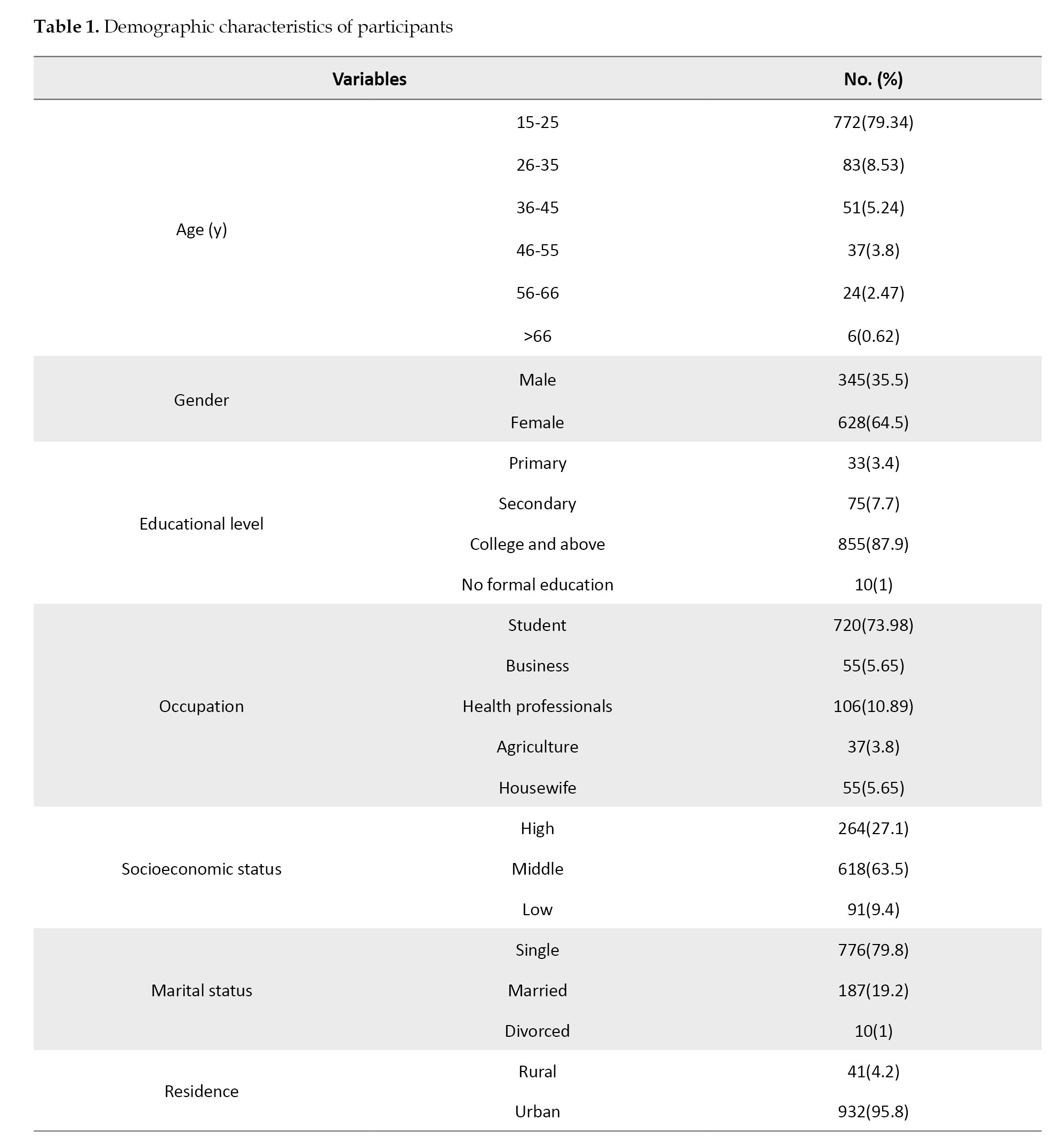
A total of 1,400 individuals were approached for the survey, of whom 973 responded, yielding a response rate of 69.5%. The majority of respondents fell within the age range of 15 to 25 years, comprising 79.3% of the sample. Among the participants, 64.5% were female, while 35.5% were male. In terms of educational attainment, 87.9% possessed a higher education degree. Notably, 74% of the respondents identified themselves as students. The predominant marital status among the respondents was single, with 79.8% reporting this status. Regarding monthly family income, 63.5% reported an average income, and 27.1% indicated a higher income level. Furthermore, approximately 95.8% of the respondents resided in urban areas (Table 1).
Participants knowledge regarding rabies
As shown in Table 2, of the 973 respondents surveyed, a substantial proportion, specifically 92.4%, demonstrated awareness that rabies is a zoonotic disease.
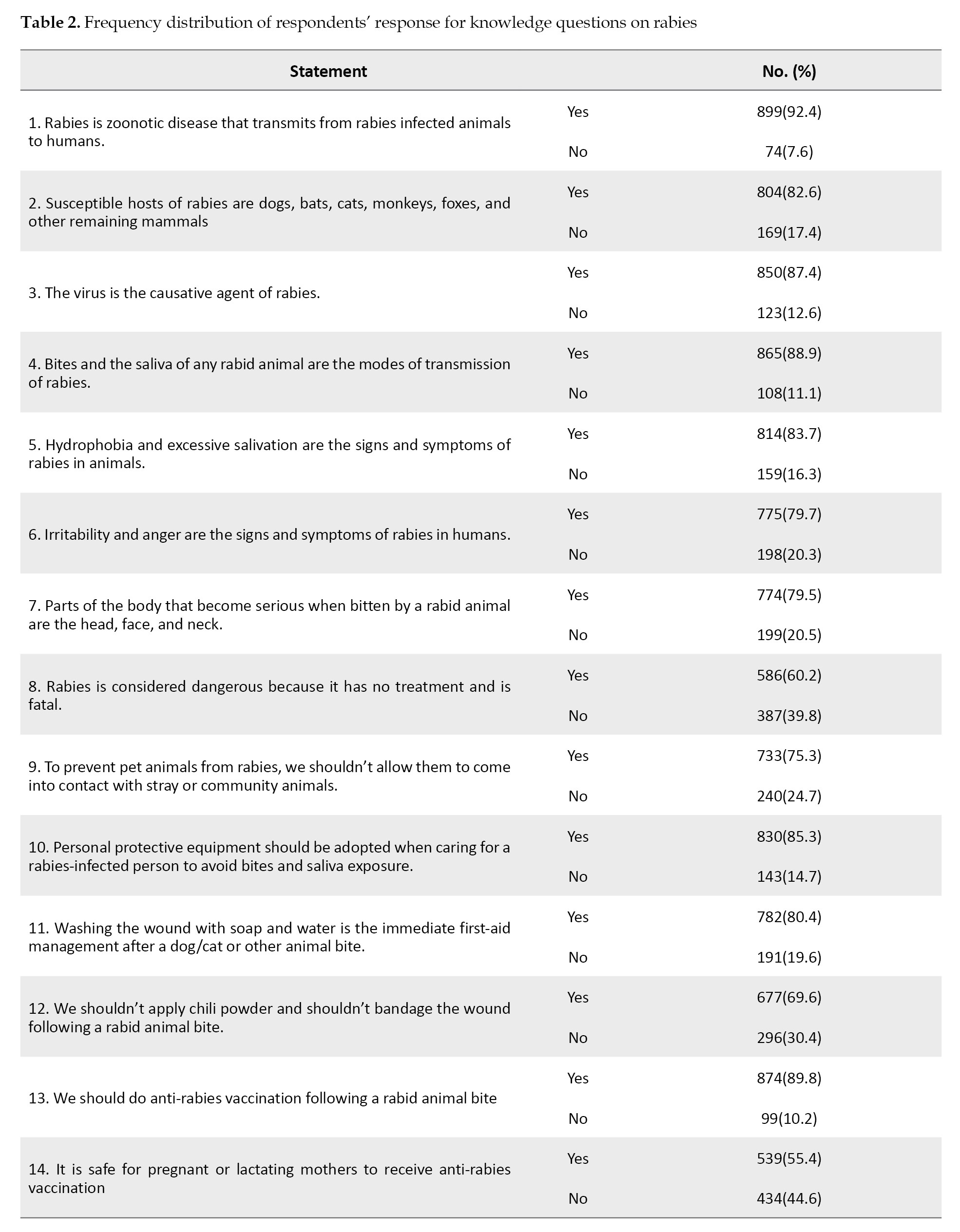
Furthermore, 82.6% accurately identified the susceptible hosts for rabies, while 87.4% recognized the causative agent of the disease. Moreover, approximately 88.9% of the respondents could correctly articulate the transmission mode for rabies, and 83.7% could identify the signs and symptoms of rabies in animals and humans. Regarding awareness of the potential dangers associated with rabies, 79.5% of respondents acknowledged that bites from a rabid animal to the head, neck, and face could be particularly severe. Additionally, 60.2% recognized the peril posed by rabies due to the absence of an effective treatment and its fatal consequences. A significant majority, approximately 75.3%, understood the importance of preventing interactions between pets and stray or community animals to mitigate the risk of rabies transmission.
Regarding safety precautions, an impressive 85.3% recognized the necessity for personal protective equipment to prevent bites and exposure to saliva when caring for an individual infected with rabies. Furthermore, a considerable majority of the participants (80.4%) understood that immediate first aid management for animal bites involves thorough washing of the wound with soap and water. About 69.6% acknowledged that the application of chilli powder and the subsequent bandaging of the wound following a bite from a rabid animal is not advisable. Furthermore, the majority of the respondents, 89.8%, were aware that anti-rabies vaccination should be administered following a bite from a rabid animal. However, only 55.4% of the participants were knowledgeable about the vaccine’s safety for pregnant and lactating individuals (Table 2).
Participants’ attitudes regarding rabies
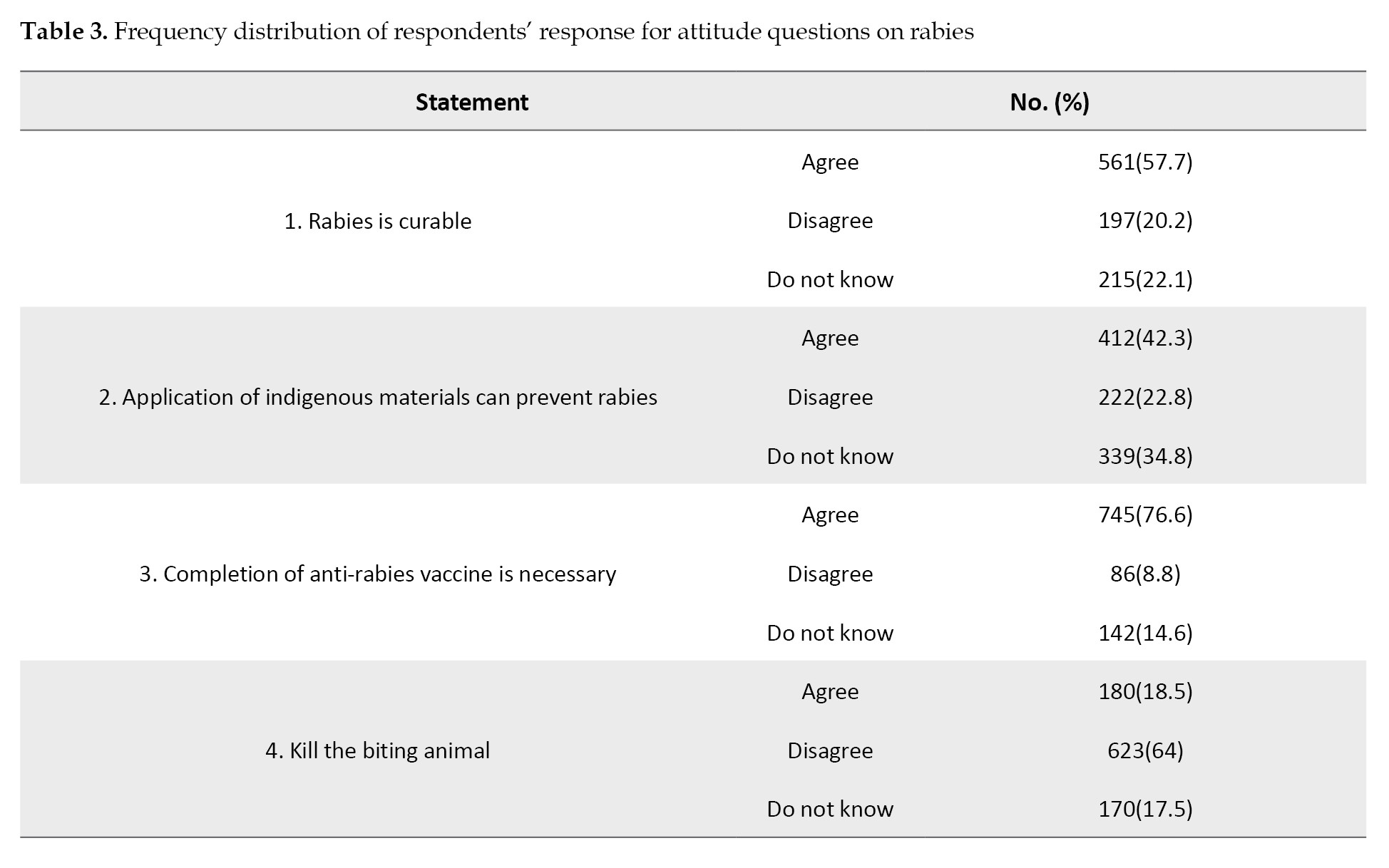
A minority of participants, specifically 20.2%, disagreed with the notion that rabies is a curable disease. Additionally, 22.8% expressed disagreement concerning the efficacy of indigenous materials applied to wounds as a means of preventing rabies. Conversely, approximately 76.6% of the majority acknowledged that completing post- anti-rabies vaccine (ARV) is essential. Furthermore, around 64% of the participants opposed the practice of euthanizing the animal that inflicted the bite (Table 3).
Participants’ practices regarding rabies prevention
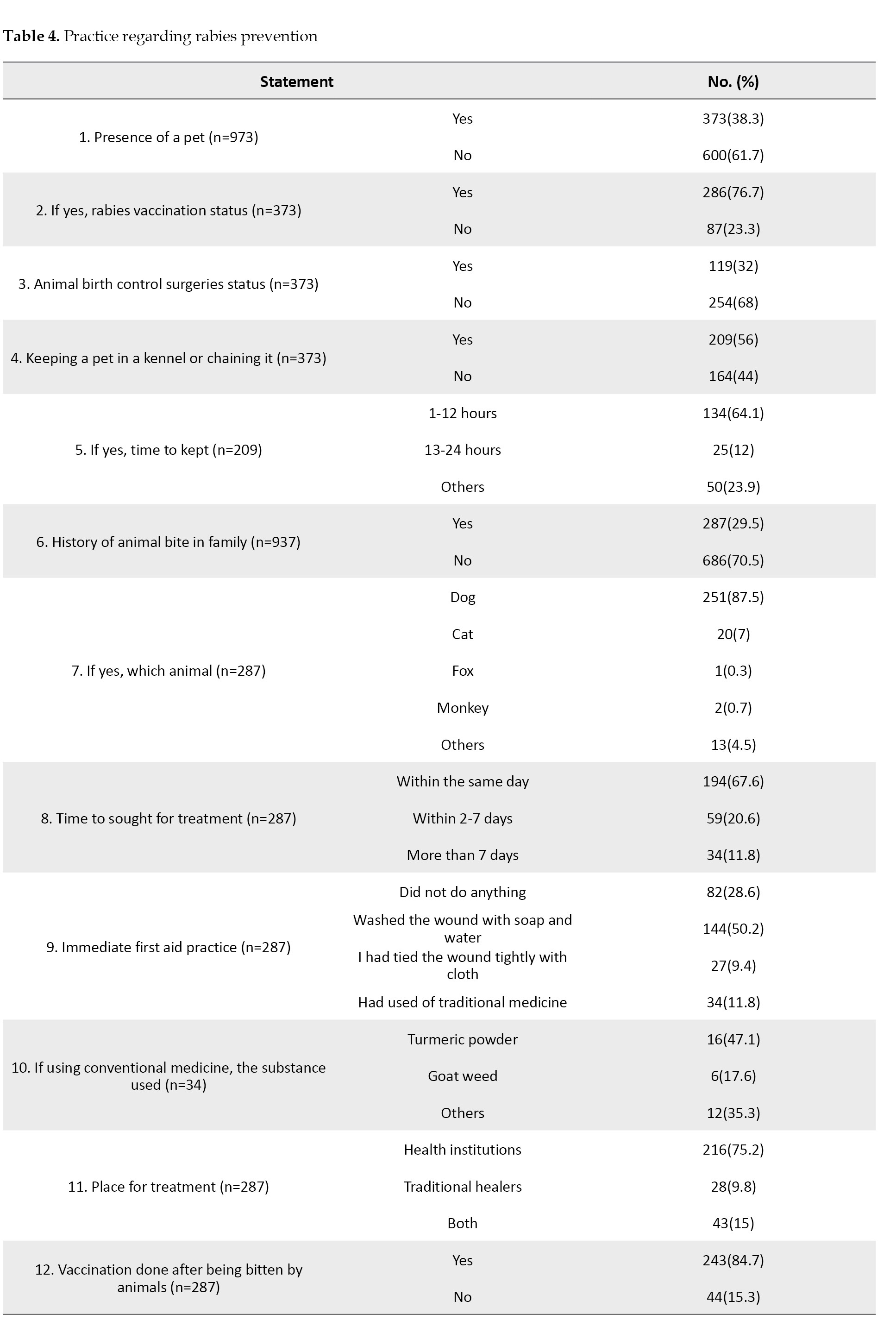
Among 973 participants surveyed, only 38.3% (n=373) reported pet ownership. Of these, a significant majority, 76.7% (n=286), confirmed that their pets had received anti-rabies vaccinations. Furthermore, 32% (n=119) indicated that their pets had undergone animal birth control surgeries. Approximately 56% (n=209) of the participants adhered to practices of keeping their pets restrained, either in kennels or by chaining them. Among this group, 64.1% (n=134) reported confining their pets for an estimated duration of 1 to 12 hours each day.
Regarding exposure to animal bites, 29.5% of the 973 respondents reported a history of such incidents within their families, with 87.5% identifying dogs as biting animals. Notably, 67.6% sought medical treatment on the same day as the bite incident. Among those who sought treatment, 50.2% (n=144 out of 287) employed soap and water to cleanse the wound, while approximately 11.8% opted for traditional medicine as immediate first aid following the animal bite.
Specifically, among those utilizing traditional remedies, 47.1% (n=16 out of 34) used turmeric as an immediate treatment for animal bites. Furthermore, nearly 75.2% pursued treatment at health institutions after the bites. Additionally, 84.7% of the participants received vaccinations following exposure to animal bites (Table 4).
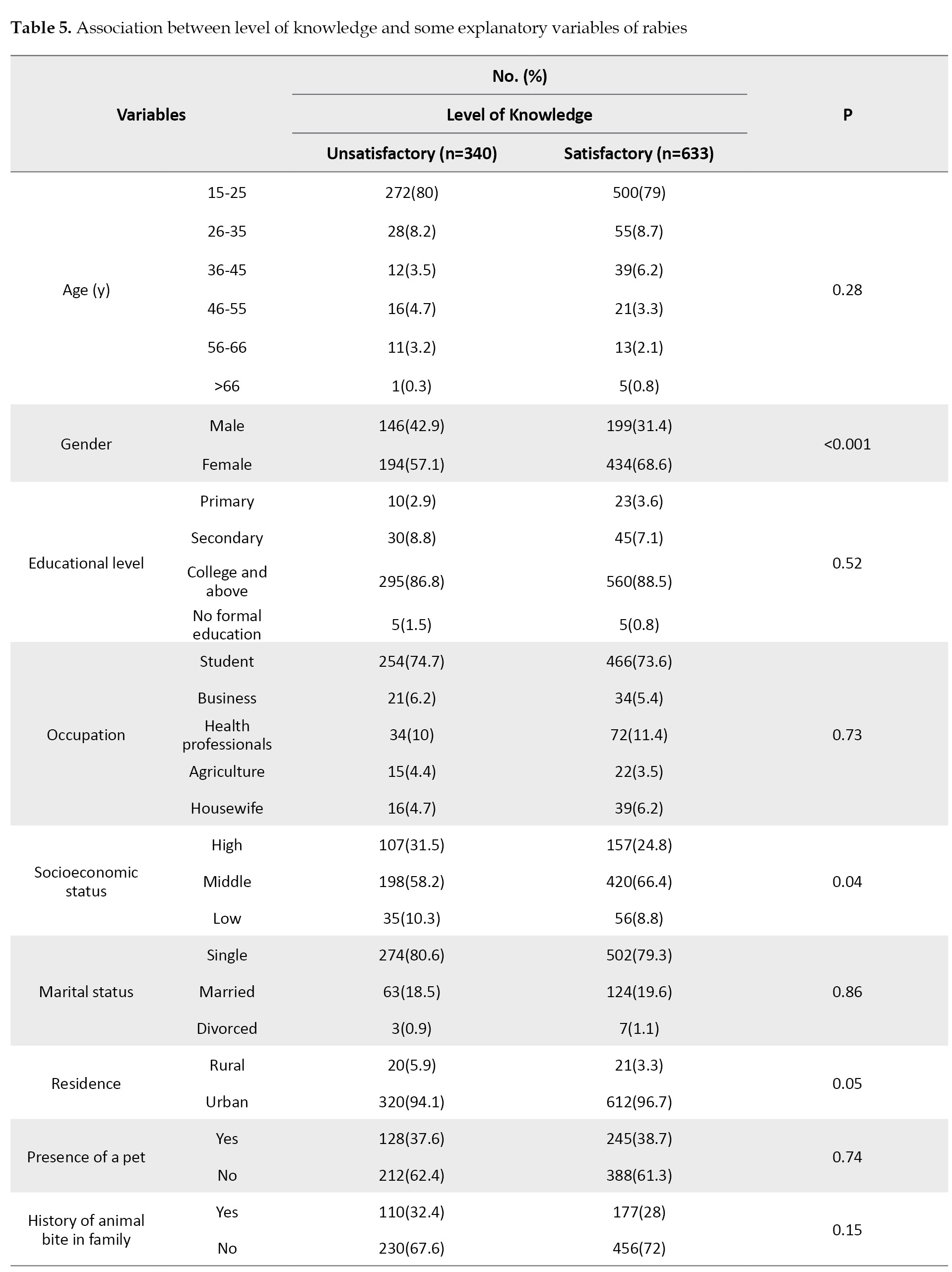
Association between demographic characteristics and level of knowledge
In this study, the chi-square test was utilized to assess the relationship between the independent variables and the level of knowledge regarding the subject matter. The findings revealed significant differences in knowledge levels related to gender (P=0.00), socioeconomic status (P=0.04), and residence (P=0.05). Conversely, no statistically significant differences were identified in knowledge levels across age, occupational status, educational background and marital status (Table 5).
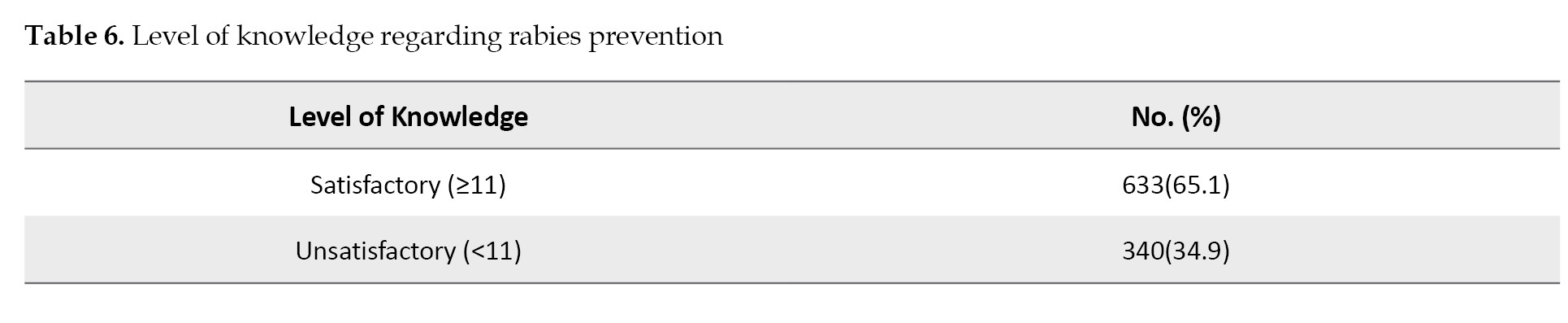
Overall, 65.1% of the 973 respondents demonstrated a satisfactory level of knowledge concerning rabies, whereas 34.9% exhibited an unsatisfactory level of knowledge on the topic (Table 6).
Discussion
KAP studies have become instrumental in enhancing community awareness, thereby fostering changes in attitudes and promoting practices that contribute to effective disease prevention and control strategies (Sambo et al., 2014; Tiembré et al., 2014). The finding that 92.4% of respondents were familiar with rabies is particularly noteworthy. This result aligns with research conducted in Mekelle City, Ethiopia, where respondents demonstrated commendable KAP regarding rabies prevention and control. Similarly, studies in the Debark district (Yalemebrat et al., 2016) and Debretabor (Alie et al., 2015) reported awareness levels of 99.3%, 100%, and 100%, respectively. Other studies across Ethiopia have also documented a generally high level of awareness concerning rabies (Serebe et al., 2016; Jemberu et al., 2013).
In contrast, the current study’s results surpass those from Addis Ababa, reporting an awareness level of 83% (Ichhupujani & Mittal, 2006). This discrepancy may arise from variations in access to health education programs, vaccine availability, and the effectiveness of community-based information dissemination systems. Rural areas often rely on interpersonal communication, traditional healers, and veterinary outreach programs, whereas urban populations may depend more on media or healthcare facilities. These differing communication channels could significantly influence awareness levels and perceptions of disease risk. Moreover, seasonal variations in dog bite incidence and rabies outbreaks may also heighten public awareness temporarily, suggesting that knowledge may fluctuate with exposure risk.
Despite the high overall awareness, approximately 12.6% of participants harbored misconceptions regarding the causative factors of rabies. This persistence of misinformation, even among educated populations, suggests that knowledge alone may not ensure correct understanding. Misconceptions often stem from deeply rooted cultural beliefs, traditional healing practices, and the limited accessibility of scientifically accurate information in local languages. For instance, earlier research around Dessie Town found that 49.6% of respondents were unclear about the disease’s cause, while in the Debark district, 83.7% attributed rabies to psychological or spiritual causes, starvation, or thirst (Yalemebrat et al., 2016). These findings indicate that knowledge dissemination needs to be culturally contextualized—merely increasing factual awareness without addressing traditional belief systems may not eliminate erroneous perceptions.
Regarding public health significance, the finding that 88.9% of respondents understood rabies to be a zoonotic disease highlights growing community awareness of its transmission dynamics. Furthermore, 83.7% of respondents demonstrated correct recognition of clinical signs, such as hypersalivation and hydrophobia, which aligns with findings from Bahir Dar (Tadesse et al., 2014) and Abia State, Nigeria (Mshelbwala et al., 2014). The accurate identification of these hallmark signs indicates effective transmission of basic rabies knowledge, likely through public health campaigns and community-level experiences with rabid animals. However, contrasting findings from Debretabor (Alie et al., 2015), where only 36.5% identified typical clinical signs, suggest that regional disparities in health education, literacy, and animal health infrastructure remain influential factors.
Most respondents correctly recognized that rabies is transmitted through bites, scratches, or saliva contact with open wounds. This observation corroborates findings from Addis Ababa (Singh et al., 2015) and Tanzania (Sambo et al., 2014), although studies, such as Gondar Zuria (Reta et al., 2015) have shown that many communities primarily associate transmission only with bites. This suggests that risk perception tends to be incident-driven—individuals who have witnessed or experienced dog bites are more likely to associate the act of biting with rabies, while less visible modes of transmission (e.g. saliva contact) may be underrecognized. This underscores the need for continuous public health communication emphasizing all possible transmission routes.
The persistence of misconceptions despite generally high awareness levels raises critical public health implications. First, it reflects that knowledge acquisition does not necessarily translate into behavioral change. People may possess factual information but continue to rely on traditional remedies due to cultural comfort or distrust of formal healthcare systems. Second, the finding highlights potential weaknesses in current education strategies, which may emphasize information delivery over participatory learning. Interactive, community-based education—especially involving local leaders, teachers, and animal health workers—could be more effective in transforming attitudes and practices. Third, the results point to the need for integrating rabies education into school curricula and primary healthcare outreach, ensuring early and sustained understanding among children and families.
Overall, the findings affirm that while general awareness of rabies is commendably high, gaps in depth of understanding and practical application persist. Addressing these requires a multi-pronged approach—combining factual education, cultural sensitivity, and continuous public engagement—to strengthen community participation in rabies prevention and control.
Conclusion
The present study reveals significant gaps in KAP concerning rabies, as well as key sociodemographic factors that influence its prevention and control. Socioeconomic status, gender, and place of residence emerged as the most critical determinants shaping the community’s KAP scores. While overall awareness of rabies as a fatal zoonotic disease was high, misconceptions about its causation, transmission, and preventive measures persist, indicating that knowledge has not fully translated into appropriate preventive practices.
These findings underscore the urgent need for strengthened, community-centered rabies prevention strategies. In alignment with the study objectives, it is recommended that public health authorities in Tamil Nadu and across India intensify awareness and educational campaigns focusing on high-risk and low-literacy populations, particularly in rural and peri-urban areas where traditional beliefs often influence health-seeking behaviors. Culturally tailored information, education, and communication (IEC) materials in local languages, combined with school-based health education and village-level outreach programs, could substantially enhance understanding and early reporting of suspected rabies cases.
Ensuring accessibility, affordability, and availability of rabies vaccines for both humans and dogs remains a cornerstone of rabies control. State governments, in collaboration with veterinary and public health departments, should strengthen mass dog vaccination drives, implement regular stray dog population management, and ensure uninterrupted PEP supply at all primary healthcare centers. Integrating One Health approaches—linking human, animal, and environmental health sectors—would further enhance surveillance, data sharing, and intersectoral coordination.
In conclusion, rabies elimination in Tamil Nadu and India is achievable through a multipronged approach encompassing sustained public education, strong interdepartmental collaboration, and consistent vaccination coverage. Future efforts should focus on evaluating the long-term impact of awareness programs, improving community compliance with vaccination guidelines, and fostering a culture of preventive health behavior to achieve the national target of zero human rabies deaths by 2030.
Limitations
This study has several limitations that should be acknowledged. First, the sampling was predominantly urban-based, which may have introduced an urban bias and limited the representation of rural populations. Second, as the data were collected through self-reported responses, there is a possibility of reporting bias due to social desirability or recall inaccuracies.
Ethical Considerations
Compliance with ethical guidelines
This study was approved by the Ethics Committee of ACS Medical College and Hospital, Dr. M.G.R. Educational and Research Institute, Chennai, India (Code: 1253/2024/IEC/ACSMCH).
Funding
This research did not receive any grant from funding agencies in the public, commercial, or non-profit sectors.
Authors' contributions
All authors contributed equally to the conception and design of the study, data collection and analysis, interception of the results and drafting of the manuscript. Each author approved the final version of the manuscript for submission.
Conflict of interest
The authors declared no conflict of interest.
Acknowledgments
The authors wish to express their sincere gratitude to the general population for their invaluable time and cooperation in providing the information necessary for this study.
References
Alie, A., Assefa, A., Derso, S., & Ayele, B. (2015). Assessment of knowledge, attitude and practice on rabies in and around Debretabor, South Gondar, Northwest Ethiopia. International Journal of Basic and Applied Virology, 4(1), 28–34. [Link]
Dalfardi, B., Esnaashary, M. H., & Yarmohammadi, H. (2014). Rabies in medieval Persian literature - the Canon of Avicenna (980-1037 AD). Infectious Diseases of Poverty, 3(1), 7. [DOI:10.1186/2049-9957-3-7] [PMID]
Dewan, D., Langeh, S., Kotwal, S., Gupta, R., & Kumar, D. (2024). Rise in rabies cases in Jammu region: A problem that requires urgent attention. Journal of Family Medicine and Primary Care, 13(8), 3415-3419. [DOI:10.4103/jfmpc.jfmpc_6_21] [PMID]
Finnegan, C. J., Brookes, S. M., Johnson, N., Smith, J., Mansfield, K. L., & Keene, V. L., et al. (2002). Rabies in North America and Europe. Journal of the Royal Society of Medicine, 95(1), 9-13. [DOI:10.1177/014107680209500104] [PMID]
Ichhpujani, R. L., Chhabra, M., Mittal, V., Bhattacharya, D., Singh, J., & Lal, S. (2006). Knowledge, attitude and practices about animal bites and rabies in general community--a multi-centric study. The Journal of Communicable Diseases, 38(4), 355–361. [PMID]
Jemberu, W. T., Molla, W., Almaw, G., & Alemu, S. (2013). Incidence of rabies in humans and domestic animals and people's awareness in North Gondar Zone, Ethiopia. PLoS Neglected Tropical Diseases, 7(5), e2216. [DOI:10.1371/journal.pntd.0002216] [PMID]
Ling, M. Y. J., Halim, A. F. N. A., Ahmad, D., Ramly, N., Hassan, M. R., & Syed Abdul Rahim, S. S., et al. (2023). Rabies in Southeast Asia: a systematic review of its incidence, risk factors and mortality. BMJ Open, 13(5), e066587. [DOI:10.1136/bmjopen-2022-066587] [PMID]
Lwanga, S. K., & Lemeshow, S. (1991). Sample size determination in health studies: A practical manual. Geneva: World Health Organization. [Link]
Mshelbwala, P. P., Ogunkoya, A. B., Maikai, B. V., & Abdullahi, S. U., & Atuman, J. (2014). Knowledge, attitude and practice about dog bite and rabies exposure among dog meat consumers and processors in Abia State, Nigeria. Journal of Veterinary Advances, 4(2), 398-404. [Link]
Priya, G. S., Kumar, J. K., & Arun, R. (2021). Misconceptions and myths regarding dog bite in urban area of Kancheepuram District, Tamil Nadu. National Journal of Community Medicine, 12(9), 262-266. [DOI:10.5455/njcm.20210616075712]
Radhakrishnan, S., Vanak, A. T., Nouvellet, P., & Donnelly, C. A. (2020). Rabies as a public health concern in India - A historical perspective. Tropical Medicine and Infectious Disease, 5(4), 162. [DOI:10.3390/tropicalmed5040162] [PMID]
Reta, T., Kifelew, L. G., & Mechesso, A. F. (2015). Knowledge, attitudes and practices towards rabies: questionnaire survey in rural household heads of Gondar Zuria District, Ethiopia. BMC Research Notes, 8, 400. [DOI:10.1186/s13104-015-1357-8] [PMID]
Sambo, M., Lembo, T., Cleaveland, S., Ferguson, H. M., Sikana, L., & Simon, C., et al. (2014). Knowledge, attitudes and practices (KAP) about rabies prevention and control: A community survey in Tanzania. PLoS Neglected Tropical Diseases, 8(12), e3310. [DOI:10.1371/journal.pntd.0003310] [PMID]
Serebe, S. G., Tadesse, K. A., Yizengaw, H. A., & Tamrat, S. M. (2014). Study on community knowledge, attitude and practice of rabies in and nearby Gondar town, North West Ethiopia. Journal of Public Health and Epidemiology, 6(12), 429–435. [DOI:10.5897/JPHE2014.0669]
Singh, G., Singh, N. K., Singh, H., & Rath, S. S. (2016). Assessment of risk factors associated with prevalence of strongyle infection in equines from Central Plain Zone, Punjab. Journal of Parasitic Diseases: Official Organ of the Indian Society for Parasitology, 40(4), 1381–1385. [DOI:10.1007/s12639-015-0695-8][PMID]
Sivagurunathan, C., Umadevi, R., Balaji, A., Rama, R., & Gopalakrishnan, S. (2021). Knowledge, attitude, and practice study on animal bite, rabies, and its prevention in an urban community. Journal of Family Medicine and Primary Care, 10(2), 850-858. [DOI:10.4103/jfmpc.jfmpc_1674_20] [PMID]
Subedi, S., Adhikari, K., Regmi, D., Sharma, H. K., Bolakhe, N., & Kandel, M., et al. (2023). Assessment of community knowledge and practices towards rabies prevention: A cross-sectional survey in Bharatpur, Chitwan, Nepal. Zoonotic Diseases, 3(3), 203-214. [DOI:10.3390/zoonoticdis3030017]
Swinkels, H. M., Koury, R., & Warrington, S. J. (2025). Rabies. In StatPearls. StatPearls Publishing. [PMID]
Tadesse, G., Mersha, A. C., Basazinew, B., & Tewodros, F. (2014). Assessment of knowledge, attitude and practice about rabies and associated factors: In the case of Bahir Dar Town. Global Veterinarian, 13(3), 348-354. [Link]
Tiembré, I., Vroh Benie Bi, J., Kouassi, P., Attoh-Touré, H., Ekra, K. D., & Diane, A., et al. (2014). [Knowledge, attitudes and practices of household heads regarding rabies in the Abobo district (Abidjan, Côte d'Ivoire) in 2008 (French)]. Sante publique (Vandoeuvre-les-Nancy, France), 26(4), 547–553. [PMID]
Yalemebrat, N., Bekele, T., & Melaku, M. (2016). Assessment of public knowledge, attitude and practices towards rabies in Debark Woreda, North Gondar, Ethiopia. Journal of Veterinary Medicine and Animal Health, 8(11), 183-192. [DOI:10.5897/JVMAH2016.0504]
Zhu, S., & Guo, C. (2016). Rabies control and treatment: From prophylaxis to strategies with curative potential. Viruses, 8(11), 279. [DOI:10.3390/v8110279] [PMID]
